
Limited Company Incorporation for Property Investors
The basics of Incorporation Relief

Understanding Incorporation
Incorporation relief is a UK tax relief that allows property investors to transfer personally owned rental properties into a Limited Company without triggering an immediate Capital Gains Tax (CGT) charge, provided certain conditions are met. For higher-rate landlords affected by Section 24, incorporation can significantly improve cash flow and long-term tax efficiency – but it is complex and not suitable for every portfolio.
On this page, you’ll find useful blogs and tools to help you understand the Incorporation process and how to access the benefits of Incorporation Relief.
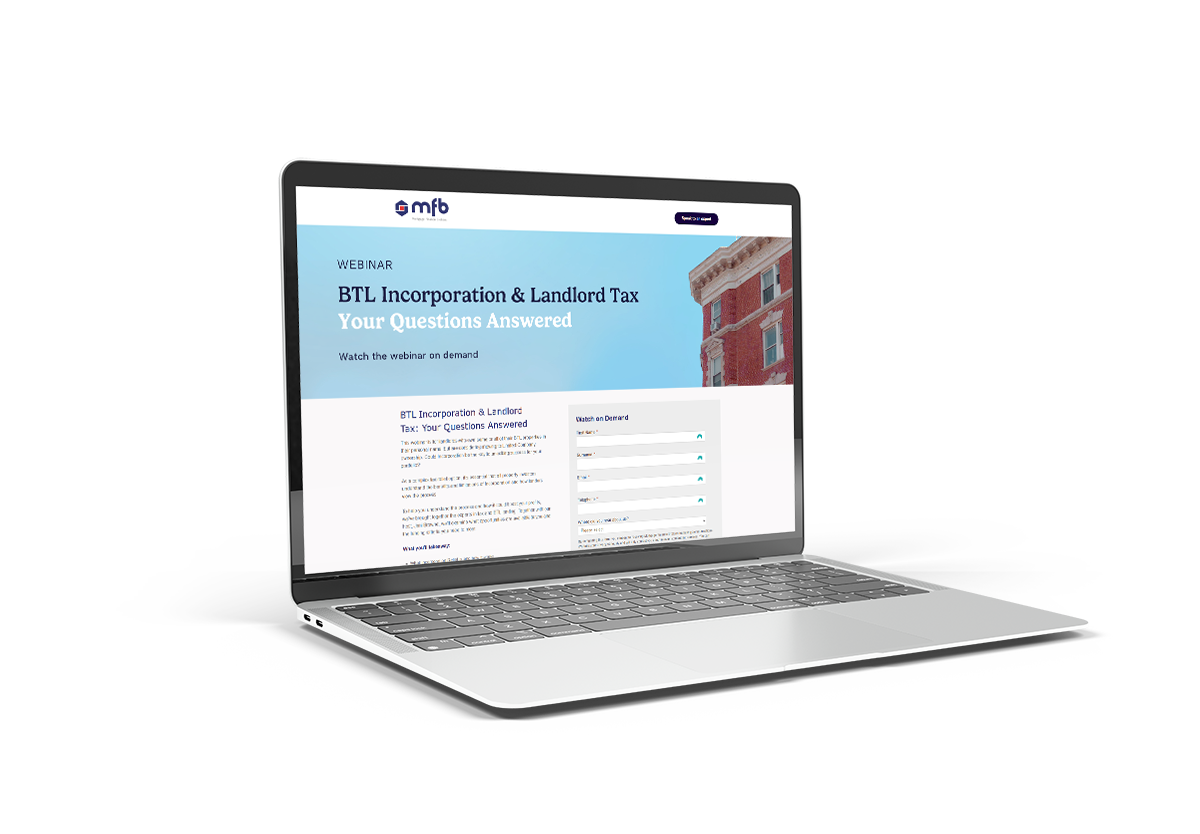
BTL Incorporation & Landlord Tax
This webinar is for landlords who own some or all of their BTL properties in their personal name, but are considering moving to Limited Company ownership. Could Incorporation be the key to unlocking success for your portfolio?
What is Incorporation Relief?
Incorporation Relief (set out under Section 162 of the Taxation of Chargeable Gains Act 1992) allows landlords to transfer a genuine property business into a Limited Company in exchange for shares, without triggering an immediate CGT liability.
To qualify, HMRC typically expects:
- A portfolio operated as a business, not a passive investment
- Evidence of regular management activity
- The entire portfolio to transfer to the company
HMRC assess claims on a case-by-case basis, which is why professional tax advice is essential.
What are the main benefits of Incorporation?
Incorporation offers plenty of benefits, such as:
- Full deduction of mortgage interest payments
- Lower overall tax liabilities
- Increased inheritance tax and estate planning options
- Potential tax efficiencies and reduced tax on disposal of properties
How long does Incorporation take?
Incorporation can be a drawn-out process as you’ll need your broker, tax advisor, and solicitor to collaborate on the case. In addition to the legal transfer of the properties into a Company, the refinancing onto Limited Company mortgages must all occur simultaneously.
Given the scale of work, getting advice and working with trusted experts is essential.
What are the costs of Incorporation?
Tax advice when incorporating your portfolio will typically cost you around £15,000. Once you factor in broker fees, valuation costs, product fees, and dual legal costs (since you act as both the buyer and the seller in this transaction), the total bill escalates quickly. Consequently, Incorporation is a financial commitment for the benefit of your portfolio in the long-term rather than just a tax-relief cash grab.
Useful Content
An Introduction to Limited Company Incorporation Relief
What is Incorporation, and how can it boost your portfolio profits? Property tax expert Sean Hughes answers your most frequently asked questions about this complex property finance process.
What are the benefits of Limited Company Incorporation?
Is Limited Company Incorporation right for me? Qualified tax expert Sean Hughes looks at the benefits and drawbacks of the process to help you make informed property investment decisions.
6 Top Tips for Your Incorporation Process
How can you ensure a successful Incorporation process? Here, we share the top tips from tax expert Sean Hughes.
Incorporation: The Hidden Costs and Risks for Landlords
What risks can come with incorporating your portfolio, and what are the costs? Here, we cover all the details you need to know.
Frequently asked questions…
Do I qualify for Incorporation Relief as a landlord?
Does Incorporation trigger Stamp Duty Land Tax?
Can I incorporate part of my portfolio?
Will my mortgages need to be redeemed?
Is Incorporation worth it after the costs?
Keep reading...
Incorporation: Is It the Right Move for Your Property Portfolio?
Should you incorporate your property portfolio? What are the benefits and drawbacks of the process?
Our Client’s Story: Incorporating with the Help of MFB and Comprehensive Tax Planning
Considering Incorporation for your buy to let portfolio? In this interview with long-term MFB Client, Rent London Homes, we look at his successful journey and the benefits he’s accessed.
Incorporation of £2.8 million Portfolio: How We Secured the Best Rates
Experienced landlords wanted to transfer multiple properties from personal ownership into a new SPV Limited Company, a process complicated by the company's complex structure and lender criteria. Using our expertise and strong lender relationships, we secured competitive rates with a lender that understood our client's needs.
Why Choose MFB to Help with Your Incorporation?
- We're specialists in complex portfolio and Incorporation cases
- Experienced in refinancing multi-property portfolios during Incorporation
- Strong relationships with lenders that understand and accept Incorporation deals
- We work alongside your tax advisor and solicitor for a seamless process
- 35+ years advising property investors
This content is for educational purposes only and does not constitute tax advice. Incorporation relief is subject to HMRC interpretation, and you must seek tax advice before making any investment decisions.