
Limited Company
Buy to Let Mortgages
Specialist mortgage advice for landlords buying through an SPV or limited company.

Getting started with Limited Company mortgages
A limited company buy to let mortgage is a mortgage taken out by a company, usually a Special Purpose Vehicle (SPV) set up only to own rental property, rather than by you personally. Lenders assess the rent against a lower stress test than for higher-rate taxpayers borrowing in their own name, typically 125% rather than 145%, so a company can often borrow more against the same rent. MFB arranges limited company mortgages for first-time SPV buyers, portfolio landlords and investors incorporating existing properties, using high street and specialist lenders.
Limited company lending has grown quickly, and many lenders now price SPV mortgages close to, and sometimes the same as, personal buy to let mortgages. Because criteria vary more than in personal lending, especially for new companies, holding company structures and incorporations, the right lender matters as much as the rate. That is where a specialist broker helps.
Who we help and how lenders assess
Who we help
Buying your first property through a new SPV.
Most lenders will lend to a newly formed SPV with no accounts. They underwrite the mortgage on the directors' and main shareholders' own circumstances instead.
Growing a portfolio in a company.
Portfolio landlords with four or more mortgaged properties face extra lender checks. We arrange finance across the whole portfolio, not just one property at a time. See portfolio landlord mortgages.
Moving properties you already own into a company.
Incorporation is treated as a sale to your company, so it needs a lender that accepts related-party purchases. See "Incorporating an existing portfolio" below.
Remortgaging a company-owned property.
When a fixed rate ends, we compare the whole market against your current lender's offer. See buy to let remortgages.
Trading companies and more complex structures.
Holding companies, multiple directors and trading companies that own property narrow the lender list. These are the cases where specialist knowledge matters most.
How lenders assess limited company buy to let
Lenders look at the property and the rent first, then at the people behind the company.
- Rental stress test (interest cover ratio). The rent must cover the mortgage interest, calculated at a "stress" rate, by a set margin. Limited companies, and basic-rate taxpayers borrowing personally, are typically assessed at 125%. Higher-rate taxpayers borrowing personally are typically assessed at 145%. The difference exists because companies pay corporation tax rather than income tax.
- Deposit. Most lenders lend up to 75% of the property's value, so you need a deposit of around 25%. Some go higher.
- Directors and shareholders. Nearly all lenders ask the directors and main shareholders for personal guarantees, which make them personally responsible if the company cannot pay. Lenders also check their credit history, experience and personal income.
- The company. Most lenders want an SPV whose SIC code falls under "real estate activities". The most common codes are 68100, 68209, 68320 and 68201. A company with other trading activity is assessed more closely.
What are the benefits of Limited Company buy to let?
There are several reasons why landlords opt to invest using a Limited Company rather than in their own name.
One of the main draws is the possible tax benefits. With a Limited Company structure, you pay corporation tax on rental income, which can be more cost-effective if you fall into the 40% higher-rate income tax band, so ideal for portfolio landlords. Please always seek professional tax advice before making any property investment decisions.
You also benefit from more generous lender stress tests when applying using a Limited Company structure. Where individual applicants are stress-tested at 145%, Limited Companies are assessed at 125%, meaning you could borrow more per pound of rent.
Are Limited Company mortgage rates more expensive?
Not necessarily. While mortgage rates for Limited Companies are typically more expensive than those for individuals, the pricing difference for a limited company buy to let mortgage is not significant. Many lenders will even offer the same mortgage rates to both individual and Limited Company borrowers. Our brokers will work to source the best Ltd Company BTL mortgage rates for you.
How do I set up a Limited Company?
Setting up an SPV Limited Company is easy and can be done for just £12 by signing up with Companies House.
You will need to:
- Select your trading name (that’s not already in use)
- Enter the Company’s registered address
- Name the Company directors and shareholders
- After that, you will need to choose the right SIC code for your buy to let business.
There are a few other steps to go through when registering. Read our full blog on setting up your SPV Limited Company to purchase property for all the information you will need.
Who we help and how lenders assess
You can set up an SPV online at Companies House for £50, or ask your accountant to do it. You will need to:
- Choose a company name that is not already registered.
- Give a registered office address.
- Name the directors and shareholders.
- Choose a SIC code under "real estate activities". Most landlords use 68100 (buying and selling of own real estate) or 68209 (other letting and operating of own or leased real estate).
If you need to change the SIC code later, you can do it when you file the company's confirmation statement, and you can file that early. Our guide to setting up an SPV limited company has the full steps.
Incorporating an existing portfolio
You cannot simply transfer properties you own personally into a company. By law, the move is a sale from you to your company, so the company needs a mortgage to buy them, and the lender has to accept a sale between connected parties. Most lenders that offer limited company mortgages will consider these. The sale is usually a taxable event. The company normally pays Stamp Duty Land Tax, including the 5% surcharge on additional properties, and you may owe Capital Gains Tax.
In some cases, reliefs can reduce these, for example when a property partnership incorporates. MFB does not give tax advice: speak to an accountant or solicitor before you decide, and we will arrange the finance once you have.
Limited Company Costs to plan for
- Setting up the company - £50 at Companies House
- Lender arrangement fee - From nil to around £2,000 or a percentage of the loan, depending on the product
- Interest rate - Often slightly higher than for personal buy to let on a like-for-like basis, and sometimes the same
- Stamp duty - Calculated with the 5% surcharge; use our limited company stamp duty calculator
- MFB's fee - See our fees for the buy to let fee
- Accountancy - Annual accounts and filings for the company
Case study: incorporating a £2.8 million portfolio
Long-standing MFB clients held eight properties jointly in their own names: flats, multi-unit freehold blocks and a house. On their accountant's advice, they moved the portfolio into a new SPV. Because ownership was changing, each property had to be financed as a purchase, not a remortgage. The loans totalled about £2.1 million.
The company sat under a holding company, which ruled out most mainstream lenders. We found a specialist lender that accepted the structure and offered competitive five-year fixed rates. We then kept watching the market until completion and moved two loans onto lower rates when the lender cut them.
The result: eight loans at 75% loan-to-value on five-year fixed rates of 4.99% to 5.19%, seven of them with no arrangement fee.
Rates as at July 2025, shown as an example of a completed case. Today's rates will differ. Read the full case study
A guide to
Limited Company borrowing
Download our brochure for everything you need to know about buy to let mortgages for Limited Companies. We cover FAQs from landlords, and explore why a Limited Company could be the right option for you.
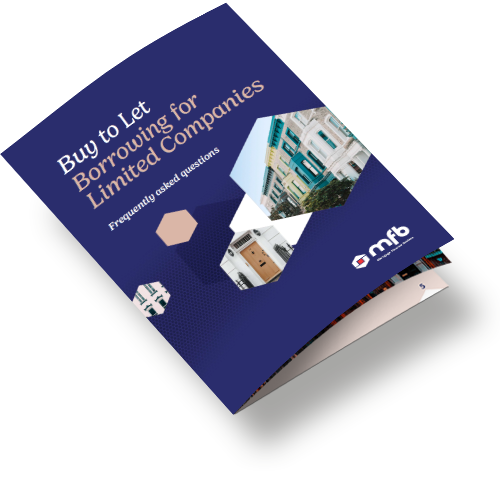
Frequently asked buy to let questions…
Can a limited company get a buy to let mortgage?
Can I get a mortgage through a newly set up SPV with no accounts?
Are limited company buy to let mortgage rates more expensive?
Can I transfer my buy to let properties into a limited company?
What is the difference between an SPV and a trading limited company?
Do I need to give a personal guarantee?
Does a limited company application take longer?
Is buying through a limited company more tax-efficient?
Talk to an expert
Have all the facts and figures you need to purchase or remortgage your property? Our experts will make the whole process easier for you! Give us a call or choose a convenient time for us to call you. Drop us an email or chat with a human on our live chat.


Meet your mortgage makers.
Learn more about buy to let mortgages
Search the latest BTL mortgage rates
Use our BTL calculator to search thousands of mortgage rates to find the best deal for you.
How much can I borrow?
Use our buy to let calculator to get started with your property investment plans
It’s time to remortgage
We’ll help you secure the best remortgage deal for your property investment needs.
BTL Mortgages for First-time Landlords
We’ll help you source and secure the best mortgage deal for your property investment
Ready to find your mortgage
The quickest way to find the right mortgage is to speak to someone who understands your situation. Please submit your contact details below to request a call back from one of our qualified mortgage brokers. If there is a particular date or time that you’d prefer to be contacted, please let us know in the message box.