
Mortgages for
Self-Employed Borrowers
Mortgages made simple for self-employed homeowners

Can You Get a Mortgage If You’re
Self-Employed?
Yes. Self-employed applicants can access many of the same residential mortgage products as employed borrowers.
The main difference is how income is evidenced and calculated. Instead of relying only on a basic salary and payslips, the lender may examine tax calculations, accounts and the performance of your business.
How you are assessed will depend on whether you are a sole trader, partner, limited company director or contractor, as well as how long you have been trading.
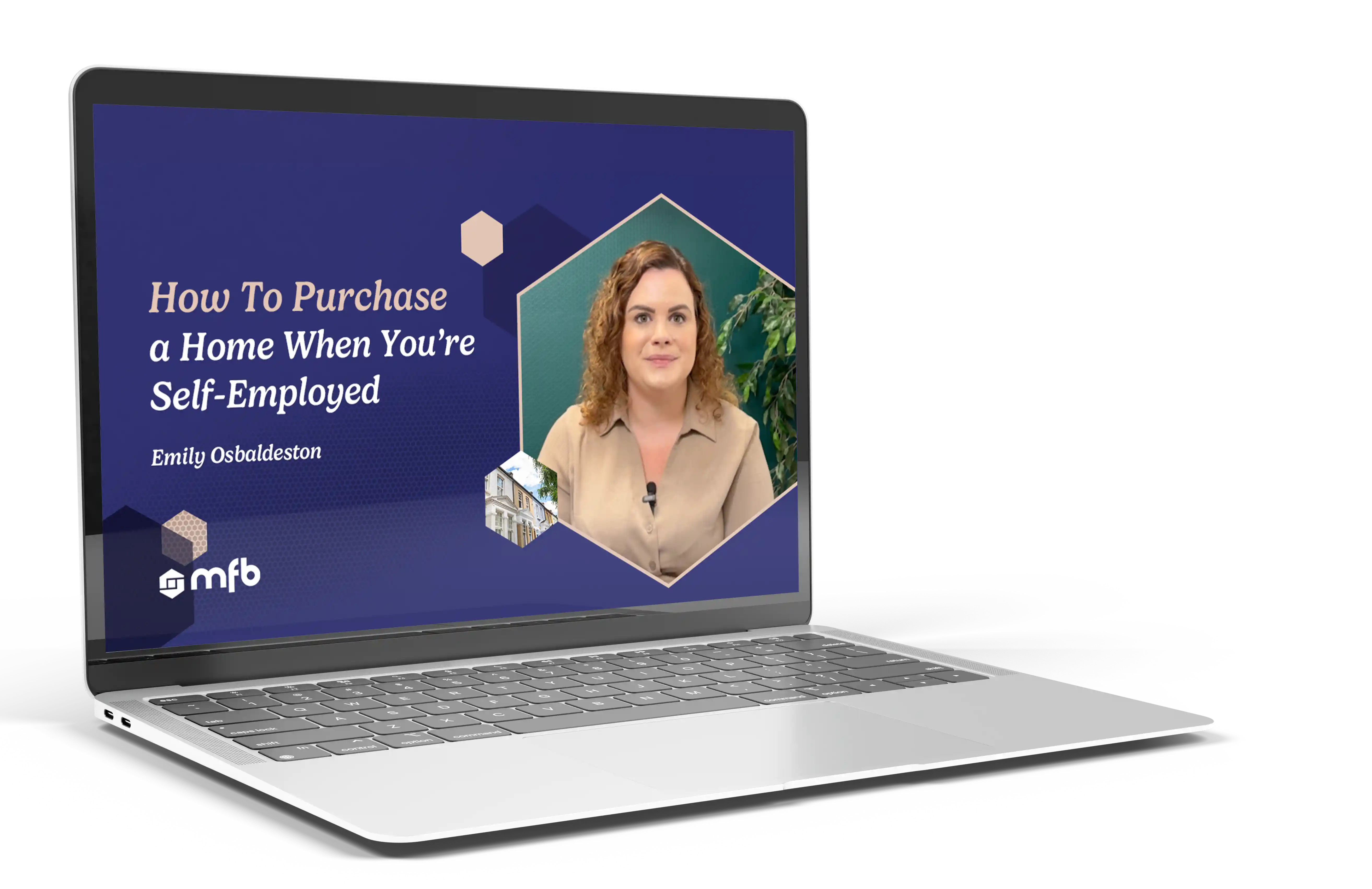
How to purchase a home when self-employed
Is it harder to get a mortgage when you’re self-employed?
Being self-employed does not automatically make you a higher-risk borrower or mean that you will pay a higher mortgage rate.
However, lender choice can be more important because different lenders may calculate the same business income differently.
The application may require additional assessment where:
- You have a short trading history
- Your income fluctuates significantly
- The latest year is lower than previous years
- Your business structure has recently changed
- You receive income from more than one business
- Your latest accounts do not reflect current trading
- You are employed and self-employed at the same time
Preparing the relevant figures before selecting a lender can help avoid an inaccurate affordability estimate or an unnecessary decline.
How Is Self-Employed Income Calculated?
The income figure used for a mortgage depends partly on how the business is structured.
Sole Traders
Sole traders are commonly assessed using the profit shown in their tax calculations or business accounts rather than total business turnover.
Depending on the lender, affordability may be based on:
- The latest year’s profit
- An average from recent years
- The lower figure where profits have declined
Business turnover is not the same as personal income. Lenders usually focus on profit after allowable business expenses.
Business Partnerships
A partner is normally assessed using their share of the partnership’s profit.
The lender may request partnership accounts alongside the applicant’s personal tax calculations. Your percentage ownership and individual profit allocation can therefore be important.
Where the partnership’s performance has changed, the lender may examine both the overall business results and the income attributed to the individual partner.
Limited Company Directors
Company directors are often assessed using salary and dividends. Some lenders can instead consider salary alongside the director’s share of company profit.
Because this requires a more detailed explanation, read our guide to mortgages for limited company directors.
Contractors
Contractors may be assessed using accounts or taxable income, but some lenders can use the current contract and contract rate instead.
Read our guide to contractor mortgages for information about day-rate, umbrella-company and CIS assessments.
Do Lenders Use the Latest Year or an Average?
There is no single calculation used by every lender.
Where profits are stable, a lender may use an average from the most recent two years. Other lenders can use the latest year where the figures are increasing and the higher income appears sustainable.
If the most recent profit is lower, the lender may use that lower figure rather than an average. It may also request an explanation for the reduction and more recent evidence of business performance.
This means that two lenders could produce different affordability figures from the same accounts.
Can I Get a Mortgage with One Year of Self-Employment?
Potentially. Although many lenders prefer applicants to have at least two years of trading history, some can consider one completed year of accounts or tax figures.
They may also consider:
- Previous experience in the same profession
- Whether you moved from employment into the same line of work
- Current business performance
- The strength of the overall application
- Deposit and credit history
- Whether the latest figures cover a complete trading year
Lender choice is normally more limited with one year’s trading history, but it does not automatically prevent you from obtaining a mortgage.
What If My Self-Employed Income Has Changed?
Increasing profits can support an application, but not every lender will use the latest and highest figure automatically. A lender may still average recent years or request evidence that the increase is sustainable.
If profit has declined, the lender might:
- Use the latest lower figure
- Ask why income has fallen
- Review current-year performance
- Request management accounts or an accountant’s projection
- Consider whether the change was temporary or ongoing
Your latest completed accounts should therefore be reviewed alongside the current trading position before an application is submitted.
What Documents Do Self-Employed Applicants Need?
The documents required depend on your business structure and the lender’s criteria.
You may be asked for:
- SA302 tax calculations
- Tax year overviews
- Business or partnership accounts
- Personal bank statements
- Business bank statements
- Proof of deposit
- Identification and proof of address
- An accountant’s reference
- Management accounts or current-year figures
A sole trader may primarily be assessed using tax calculations, while a partnership application may also require partnership accounts.
Limited company directors can require company accounts, dividend records and proof of shareholding. Contractors may instead need contracts or relevant payslips.
Not every applicant needs two full years of every document. The evidence period should be confirmed before applying.
How Much Can I Borrow If I’m Self-Employed?
Being self-employed does not impose a separate borrowing limit. The amount available depends on the income figure accepted by the lender and its wider affordability assessment.
The lender will consider:
- Eligible profit or personal income
- Trading history
- Existing credit commitments
- Household expenditure
- Dependants
- Deposit and loan-to-value
- Credit history
- Mortgage term
- Other sustainable household income
The same business figures can produce different borrowing estimates because lenders may use the latest year, an average or the lower recent figure.
Use our how much can I borrow calculator for an initial residential estimate, but remember that a calculator cannot interpret accounts or decide which self-employed income figure a lender will accept.
Are You a Limited Company Director?
If you operate through a limited company, your mortgage affordability may be assessed using salary and dividends or, with certain lenders, your share of company profit.
Our dedicated guide to mortgages for limited company directors explains retained profits, shareholding and company-profit assessments in full.
Preparing for a Self-Employed Mortgage Application
Before applying:
- Make sure your tax returns and accounts are up to date
- Check that your tax calculations match the corresponding tax year overviews
- Identify any significant increase or reduction in income
- Keep personal and business transactions clearly identifiable
- Prepare recent business bank statements where required
- Discuss any planned change to your business or income structure with your accountant
- Have your income documents reviewed before selecting a lender
Avoid changing how you draw income solely for a mortgage application without first obtaining appropriate tax and accounting advice.
How MFB Helps Self-Employed Applicants
Different lenders can interpret the same accounts and tax figures differently.
Before recommending a mortgage, MFB can establish:
- How your business structure affects the assessment
- Which income figure a lender is likely to use
- Whether the latest year, an average or the lower figure will apply
- Which documents are required
- Whether one year’s trading history can be considered
- How recent changes in income should be evidenced
This allows potential lenders to be assessed against your actual trading history before an application is submitted.
Meet your mortgage makers.
Find your mortgage
Our team is here to guide you through the mortgage application process and find the best rate to suit your needs. Give us a call or submit an enquiry today to see how we can help.


Frequently asked questions…
Can Employed and Self-Employed Income Be Combined?
Can I Get a Mortgage If My Latest Profit Has Fallen?
Can I Get a Mortgage Without an Accountant?
Do Lenders Use Turnover or Profit?
Do Self-Employed Applicants Need a Larger Deposit?
How Many Years of Accounts Do I Need for a Mortgage?
Do Self-Employed Applicants Pay Higher Mortgage Rates?
Ready to find your mortgage
The quickest way to find the right mortgage is to speak to someone who understands your situation. Please submit your contact details below to request a call back from one of our qualified mortgage brokers. If there is a particular date or time that you’d prefer to be contacted, please let us know in the message box.